When you click the link, it will take you to the corresponding page.
A5ザブトンステーキコース
スペシャルサラダ
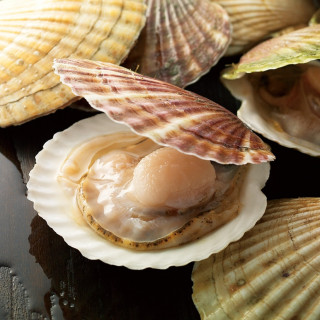
北海道産ホタテ貝柱焼き
Scallops, known as "Hotate" in Japanese, are prevalent seafood in Japanese cuisine. They are commonly found in sushi restaurants and Japanese cuisine establishments. Scallops are typically consumed raw or lightly grilled and served with sushi rice or wrapped in nori (seaweed). They can also be prepared as sashimi or sushi rolls. Although they are commonly referred to as "scallops" (the standard Japanese term is "Hotategai"), the term specifically refers to the muscular part of the scallop known as the "Hotatehashira." The word "Hotate" (帆立) has an interesting origin. According to records, in a Japanese encyclopedia from the 17th century, the appearance of a scallop with its shell open and moving resembled the image of a sailing ship with its sails unfurled, hence the name. The "ho" (帆) in Japanese represents a sail, and "tate" (立) represents standing or upright. Additional notes: Scallops can also be enjoyed pan-seared with butter, and during travels in Hokkaido, dried scallop muscles are popularly purchased as souvenirs and snacks. In 1856, scallops were given the scientific name "Mizuhopecten Yessoensis" by an American, with the first part representing the scallop genus and the latter part "Yessoensis" referring to the comb-shaped clams found in the Hokkaido region of Japan. It was named based on the resemblance between the ribbed muscles of scallops and the shape of comb clams. Scallops have also appeared in Western art history, as depicted by the Renaissance painter Sandro Botticelli in his artwork "The Birth of Venus." The goddess of love and beauty, Aphrodite, is depicted standing on a large shell, which is a scallop. When scallops move in the sea, they do not open their shells and physically move, as the name might suggest. Instead, they propel themselves by taking in water with their open shells and then forcefully expelling it. The same is true for the tongue of a geoduck clam. Throughout history, people have often named animals based on their own interpretations.
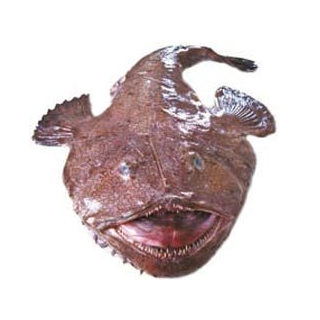
あんこう唐揚げ
The anglerfish is a deep-sea fish recognized for its large mouth and unique appearance. Its name, "anglerfish," comes from the rod-like bioluminescent organ it uses to lure prey. The meat of the anglerfish is mild, tender, and has a refined flavor, making it highly valued. Its liver, known as "ankimo" in Japanese, is especially prized as a delicacy for its rich, creamy texture and deep flavor. Winter is the prime season for anglerfish, and in sushi restaurants, ankimo is commonly served with ponzu sauce and garnishes as nigiri or gunkan-maki. Beyond sushi, ankimo is also used in steamed dishes or mixed salads, making it a versatile ingredient in Japanese cuisine and a favorite among seafood enthusiasts.
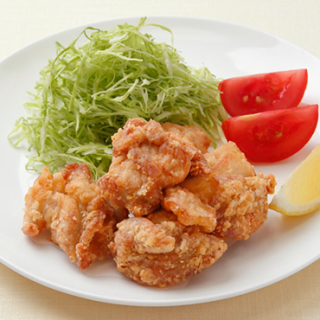
Karaage (唐揚げ) is a dish where the ingredients are coated in a thin layer of flour and fried in oil without any additional batter. When you hear the word Karaage, you might first think of fried chicken, but it can also refer to fried fish or vegetables that are coated in flour and fried. The most common cut of chicken used in Karaage is thigh meat. The "Kara" (唐) in Karaage refers to the Tang Dynasty in China, where the frying technique is said to have originated. At that time, tofu was used instead of chicken. However, with the development of the poultry industry in Japan, Karaage made with chicken is now the most popular variation. There is a similar dish called Tatsutaage (竜田揚げ), but the difference is that Karaage is mainly made with flour, while Tatsutaage is made with only potato starch. Since Tatsutaage is coated in potato starch, it has a characteristic light color. Another difference is that originally Karaage was not marinated, but Tatsutaage is marinated before frying. Nowadays, even Karaage is usually marinated, so the main difference between the two dishes is the type of flour used. When you order Karaage at a Japanese restaurant, it usually comes with a slice of lemon that you can sprinkle over the dish. However, there is an unspoken rule that you should not add the lemon without the consent of the person you're dining with, since some people prefer to enjoy the original taste of the Karaage without the lemon. It's similar to how you shouldn't pour sauce over someone's portion of tangsuyuk (sweet and sour pork) without checking if they want it
本日のおすすめ
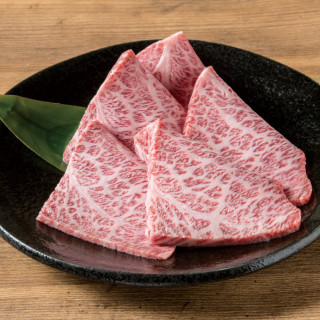
A5ザブトンステーキ
Zabuton is a part of the chuck roll of beef, located below the Kurashita. Specifically, it refers to the meat in the ribeye portion. This cut is located near the shoulder and is a rare part, with only about 3 to 4 kilograms obtainable from a single cow. Zabuton and Haneshita refer to the same part, known as Haneshita in Kansai and Zabuton in Kanto. The name "Zabuton" comes from its shape, which resembles a traditional Japanese cushion (zabuton). The name "Haneshita" literally translates to "below the wing," reflecting its anatomical position. Considering the cow's anatomical structure, Haneshita is located near the shoulder, between the torso and shoulder, under the "wing-like" structure. This part is known for being very tender and juicy compared to other parts of the chuck roll. It has a good amount of marbling, making it the "most marbled" part of wagyu beef. It is very popular for yakiniku (grilled meat) and steaks. Especially recommended for charcoal grilling or grilling, where you can enjoy its delicious aroma and taste.
熊本県産馬刺し
スペシャルお好み焼き
スペシャル塩焼きそば
ステーキめし